Blog / Auto repair Johnstown

How To Tell When You Need Brake Repair

Your car's brakes must be in good working condition to allow you to slow down and stop in a split second to avoid hazards that could lead to a collision. Below are ways to tell when your Ford F-150, Explorer, or Escape needs a brake repair from your Ford dealer to ensure you and your passengers are safe on the road.

The Brake Warning Lights Are On

Your Brake System light will warn you when there is a brake problem. If the Anti-Lock Braking System light is on, your ABS is not working. You can still brake, but you must ask your Ford technician to take a look as soon as possible.

The Brake Pads Are Worn and Thin

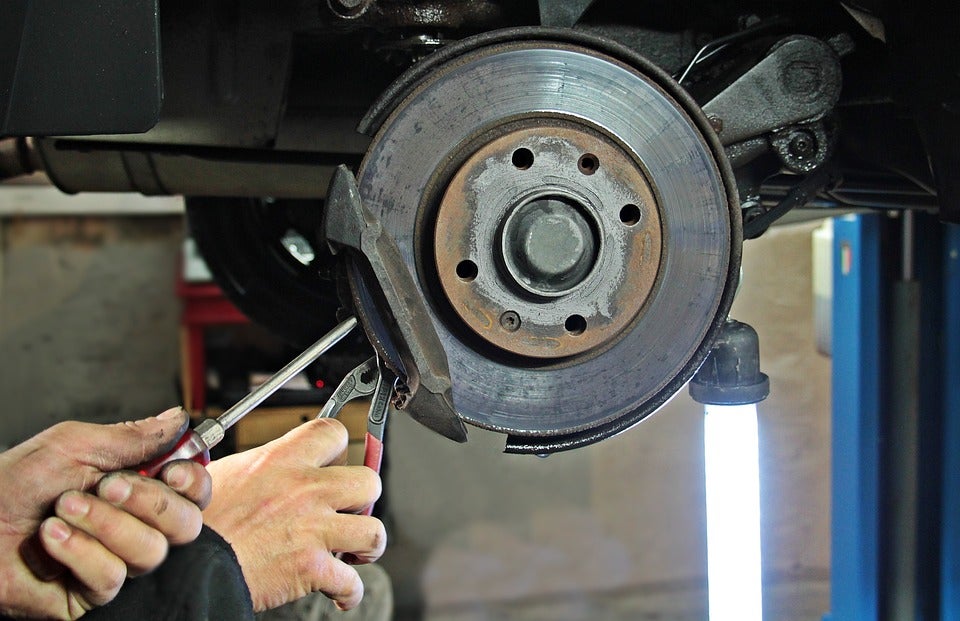
Visually inspect your brake pads; if they look worn and thin and are less than a quarter-inch thick, it's time to replace them. Thin brake pads will affect your braking power and stopping distance.

You Hear Strange Noises

When you hear a high-pitched squealing or screeching sound when you brake, it's a warning from the wear indicators built into the bake pads that the pads are wearing thin. If you don't replace the pads, you start to hear awful grinding noises from the bare metal scraping against the steel rotors.

Your Brakes Are Unresponsive

Worn brake pads and low brake fluid will make your brake feel unresponsive. When you step on the brake pedal, it may feel spongy, and it will take longer for your car to slow down and come to a stop.

You Notice a Brake Fluid Leak

It could be a brake fluid leak if you see a transparent fluid with a yellowish-to-brown tint on the ground under your car. Leaking brake fluid will trigger your brake warning light and seriously affect your braking ability.

You Smell a Burning Odor

You will smell a burning odor when your brakes get too hot from prolonged and excessive braking. When the brakes are overheated, they will not work properly. Stop your car in a safe place, wait for the brakes to cool down, and schedule a brake service appointment at your dealership.

You Feel Vibrations Through the Brake Pedal

Rotors get warped due to overheating and wear. When the rotors are warped, they don't make even contact with the brake pads, causing vibrations you will feel through the brake pedal.

Your Car Pulls to the Side

Brake pads don't wear down at the same rate, and one side might wear faster than the other. Uneven brake pad wear will cause your car to pull to the left or right when you step on the brake pedal.

Regular brake system services are crucial to keep your brakes in good working order. Check your Ford owner's manual for the recommended brake system intervals, and call Brown's Ford of Johnstown today to schedule a brake service in Johnstown and ensure your safety.

Image courtesy of Pixabay.com
Posted in:

Related Posts

Free Auto Repair Oil Change photo and picture

3 Signs You Need an Oil Change at Your Ford Dealer

Your engine depends on a constant flow of good quality oil to enable it to work effectively. Oil is one of the fluids in your car that need to be changed regularly, as time causes oil to gradually degrade. As your Ford dealer, we'd like to tell you some of the signs that you need to visit us for an oil change in Johnstown, NY. Noises From the Engine Your Ford engine is almost entirely silent as you drive, and this makes strange noises from the engine a cause for concern. Several problems can cause engine noises, but one of the most common is a lack of oil. The oil pump pumps oil through your engine, and as it circulates, it reaches every part of your engine. more Oil lubricates the hard-working engine components protects them from friction damage and cools them. As time passes, oil becomes thicker and more sluggish. It also turns darker as it absorbs dirt from the engine. Older oil is less effective in protecting components from friction and engine blockages, and you'll start hearing grinding and clunking noises as components mash against each other. We can replace the oil and the oil filter to fix this problem. Blue Exhaust Smoke Most drivers don't look at their exhaust smoke, but it should be whispy and almost invisible. If you start to see blue-hued smoke leaving the tailpipe, this is an oil-related problem. The smoke will also have the pungent smell of burning oil. The blue smoke is caused by oil leaking into your exhaust system, and this can lead to serious problems. The top and bottom sections of your engine are separated from each other by the head gasket. It prevents oil, coolant, and compression gases from mixing. If oil leaks into your exhaust it will usually happen due to a damaged head gasket. If the problem isn't fixed ASAP, your engine could be permanently damaged. We'll find the cause of the leak and repair it. If necessary, we can remove and replace the head gasket. Engine Temperature is High A higher-than-usual engine temperature can have several causes. For example, if you're driving uphill or towing a heavy weight, your engine works harder and the temperature will naturally increase. Your cooling system will speed up to reduce the temperature. A lack of oil will also cause the engine temperature to rise. As we've seen, the oil helps to cool the various engine components. If your oil level is low or dirty, this cooling ability disappears. Our technicians will check your oil and refill it. If you suspect a problem with your Ford's oil, call us immediately at Brown's Ford of Johnstown. Image courtesy of Pixabay.com

3 Engine Problems You Should Always Fix at Your Ford Dealer

As time passes, even a Ford can develop engine problems. Most problems with an engine can be traced to delayed maintenance. The complex nature of an engine means it requires regular service to keep it in good shape. Your Ford dealer in Johnstown can fix any problem in your engine. These are some problems that could occur. Damaged Ignition Coils When you think of combustion, you can visualize the fuel and air mixing in the intake manifold and then entering the cylinder. You'll also imagine the piston compressing the fuel-air mix and the spark plug igniting the contents of the cylinder. This is all correct, but the spark plug needs assistance as its 12-volt output isn't enough to fire the cylinder's contents. more A spark plug has support in the form of the ignition coil. A coil connects to each plug and boosts the power of the spark plug from 12 volts to 30,000 volts. Coils are durable, but they will eventually wear out like spark plugs. If one of your coils fails, this will cause the cylinder to misfire, as there is insufficient power to ignite the cylinder's contents. We can test the coils and replace any worn or damaged ones. Check Engine Light One of the most important warning lights on your dash is the check engine light. Many lights provide warnings of specific problems, for example, the battery warning light highlights an issue in the electrical system. The engine light has a broader mandate, as it responds to any problem that can affect the engine's performance. If this warning light illuminates, it's important to contact us right away. Since the warning doesn't highlight a specific issue, the problem could be minor, or it might be a sign of a potentially major issue. Our Ford-trained technicians are experts at diagnosis, and they'll investigate our engine until they pinpoint the cause of the problem. Once the issue is identified, we'll repair it. Dead Battery A weak or dead battery is a headache for any driver. If the battery isn't working correctly, starting your engine may be difficult or even impossible without a fix. The battery gradually wears out as its chemical processes cause it to lose the ability to charge or supply power. On average, you'll need a replacement battery within five years or 50,000 miles of driving. We can test your battery at our Johnstown service department very quickly and give you the result. If your battery is on a downward slope, we can install a new one to fix the problem. If you experience any of the above or any other problem with your engine, call us right away at Brown's Ford of Johnstown. Image courtesy of Pixabay.com

Does Your Ford Need a Transmission Repair?

The majority of gearbox trouble is caused by issues with the transmission fluid. If you keep your fluid properly topped up and have it regularly inspected, you're unlikely to experience the following problems. But sometimes transmissions begin to fail for other reasons too. If you notice any of the following six signs of trouble, visit your local Ford dealer right away for transmission repair in Johnstown, NY. Your Engine's Revving While Shifting Gears When a transmission begins to overheat or loses lubrication due to aging fluid, you'll start to hear loud revving at unusual moments, such as when you're shifting gears. The engine will also rev unusually loudly when you step on the gas, often while failing to accelerate properly. more You're Struggling to Shift Gears With gearbox problems, you might find it difficult to shift gears. Strange grinding sounds will come from below and your gears might sometimes refuse to change at all. If you drive a manual shift vehicle, your stick might become momentarily stuck. These are all surefire signs of transmission trouble. Your Gears Change By Themselves The most dangerous indication of gearbox issues is when your car suddenly decides to change gears while you're on the road. It might even slip into neutral, causing all kinds of potential driving problems. Your Clutch Isn't Working Clutch failure is another scary sign of transmission trouble. If the two clutch plates can no longer engage or disengage properly due to insufficient fluid or some other problem, then you'll lose control of your gears entirely, and perhaps even your vehicle. You Spot Leaking Transmission Fluid When you pull away from parking, you might notice a pool of reddish liquid on the ground. This points to a transmission fluid leak. Without enough fluid, your gearbox will rapidly break down unless you promptly have the leak fixed by a technician. Your Check Engine Light Comes On Fortunately, all modern Fords have extremely effective computerized monitoring systems. When a gearbox problem starts to arise, these monitors almost always detect it and warn you long before it develops into something more serious and costly to fix. How Often to Change Fluid at Your Ford Dealer Keep your transmission healthy and avoid all these problems by visiting your local dealership periodically for fluid inspections. You'll usually need to have your transmission fluid replaced every 30,000 to 60,000 miles, depending on how strenuous your regular driving conditions are. Modern Ford models require specialist transmission fluid so it's safest to have a qualified technician refresh your fluid for you. Visit Brown's Ford of Johnstown today to have your transmission checked or repaired by experienced professionals. We're the Mohawk Valley's premier dealer for Ford vehicles and our courteous, knowledgeable staff are dedicated to providing exceptional customer service. Image courtesy of Pixabay.com